Unapproved, Unexplained, Unaffordable
When Omega Villas owners were assessed thousands of dollars for a $4.85 million construction project, most believed they were paying for legitimate repairs. What many didn’t know is that unauthorized furring strips (aka Rain-Screen Wall System) were being installed behind new siding — and in many cases, insulation was removed and never replaced.
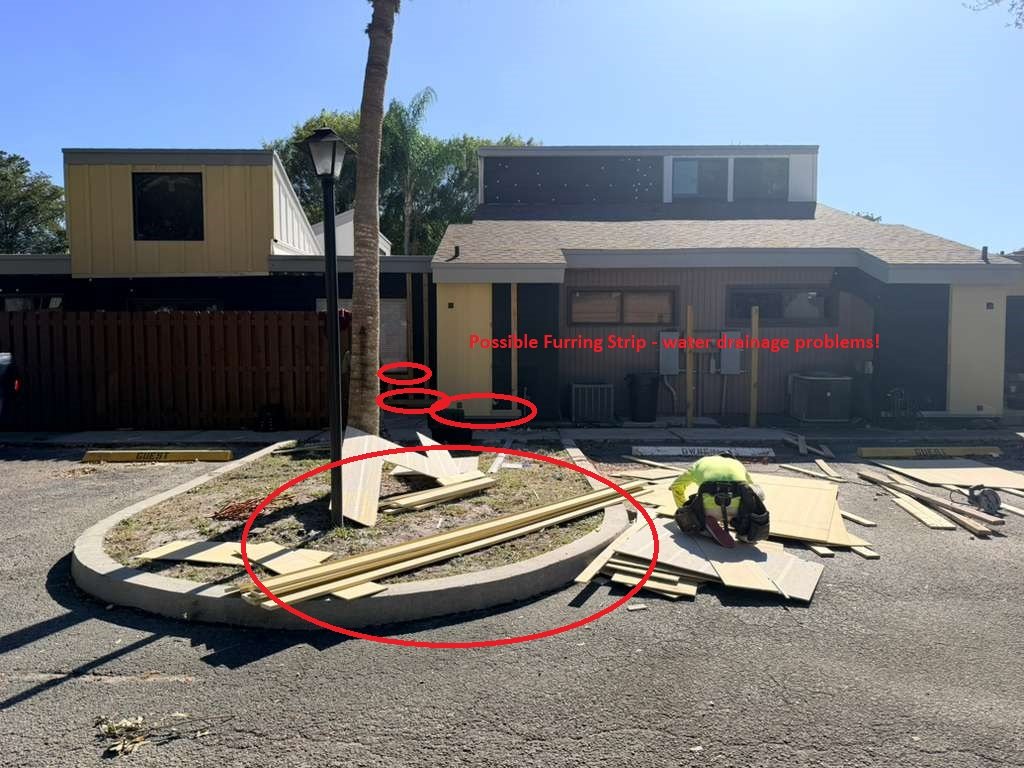
2nd Floor Renovations by Austro Construction
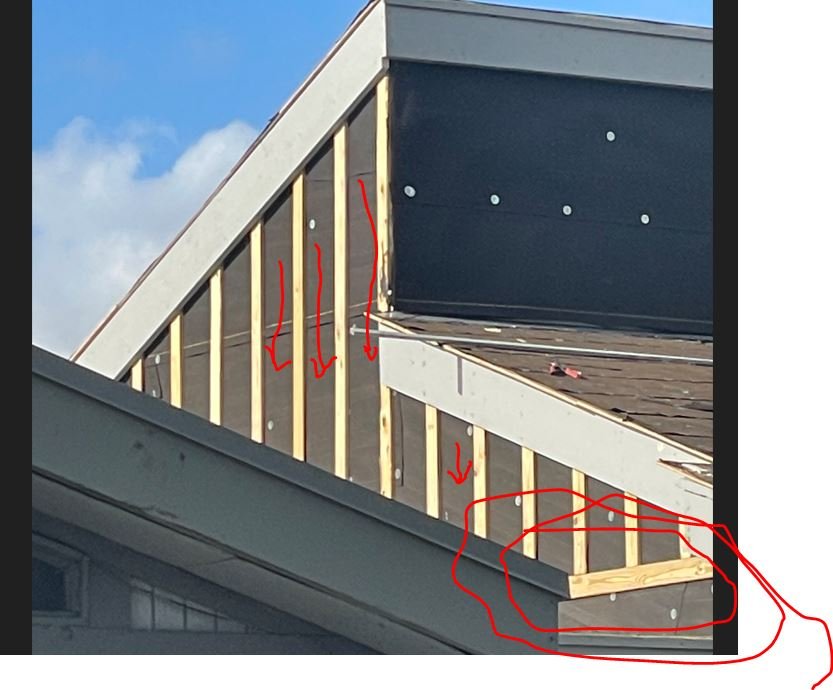
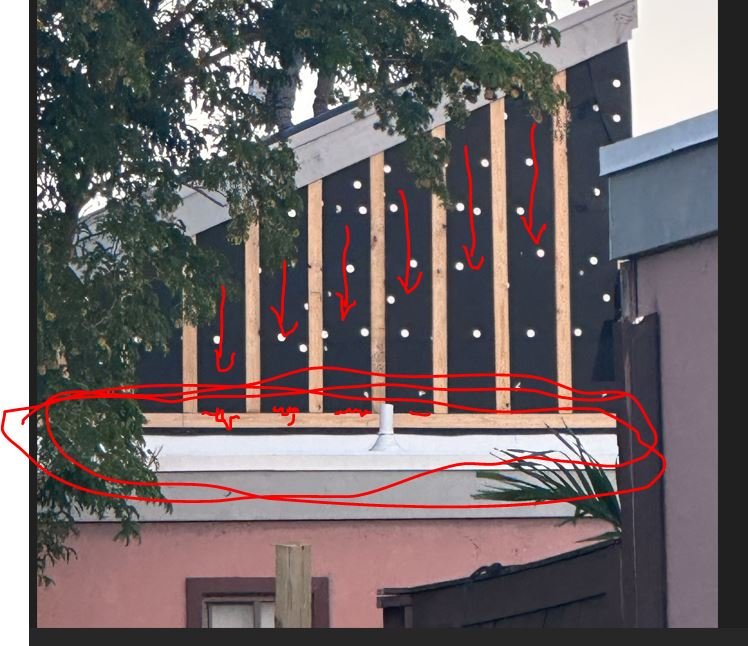
Note: the horizontal furring strip circled above may create a water dam behind the siding.
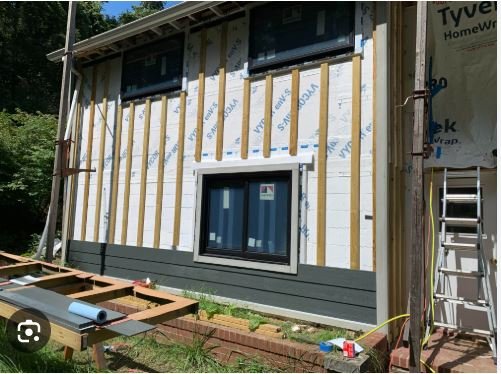
1st Floor Renovations by Austro Construction
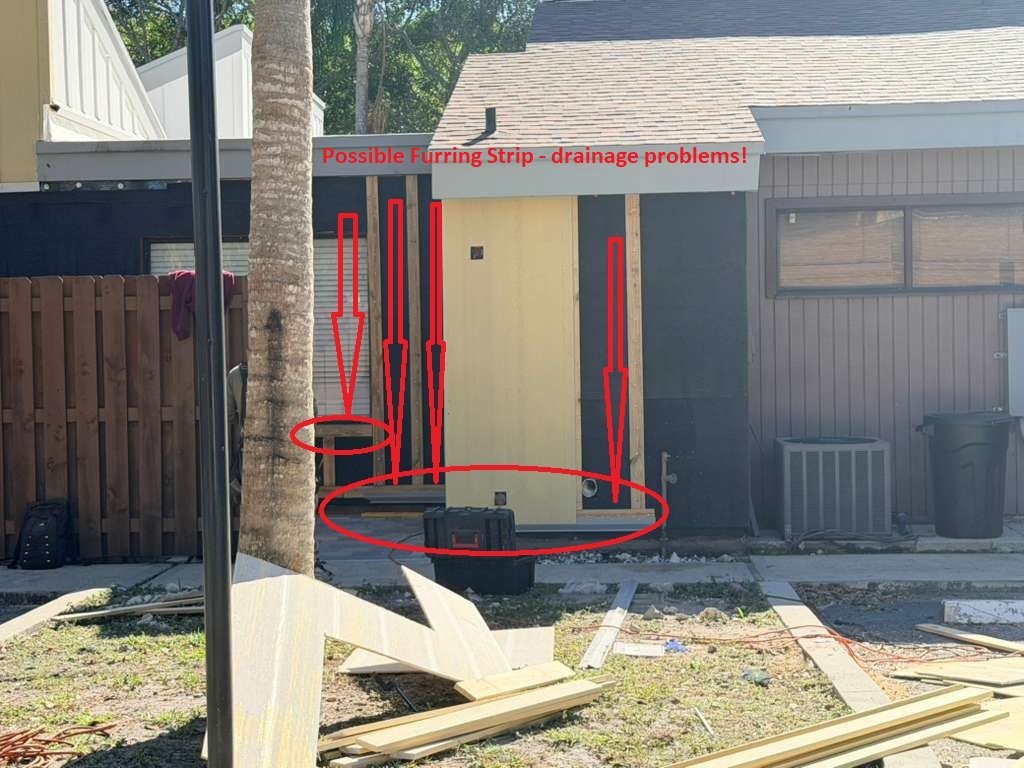
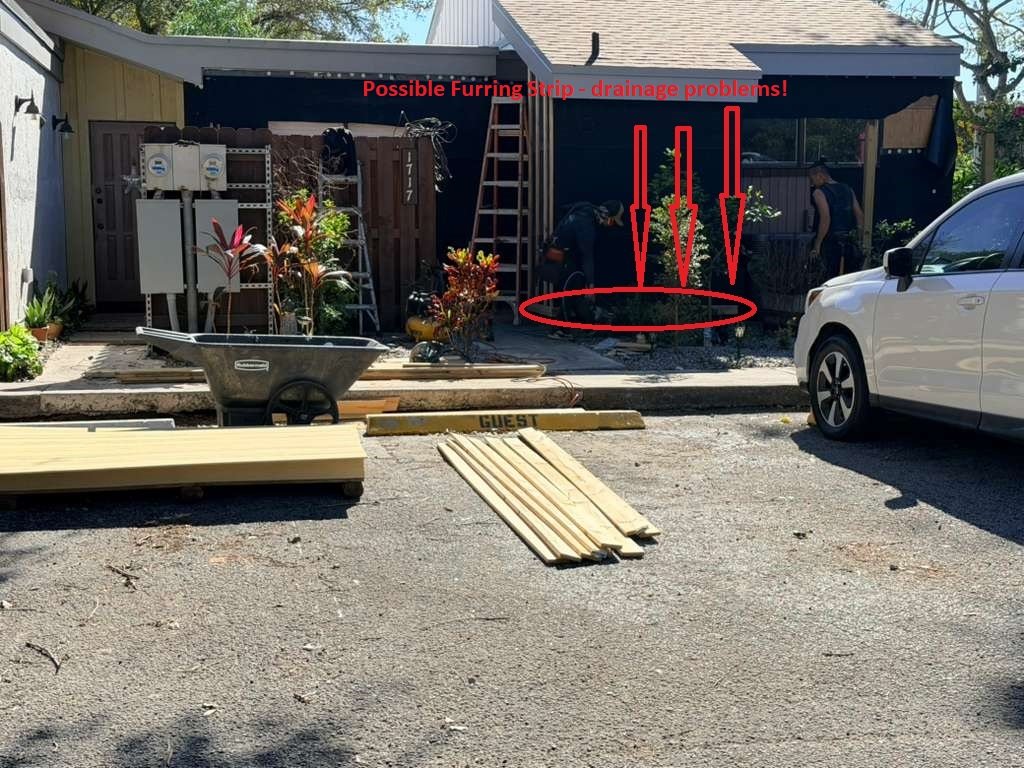
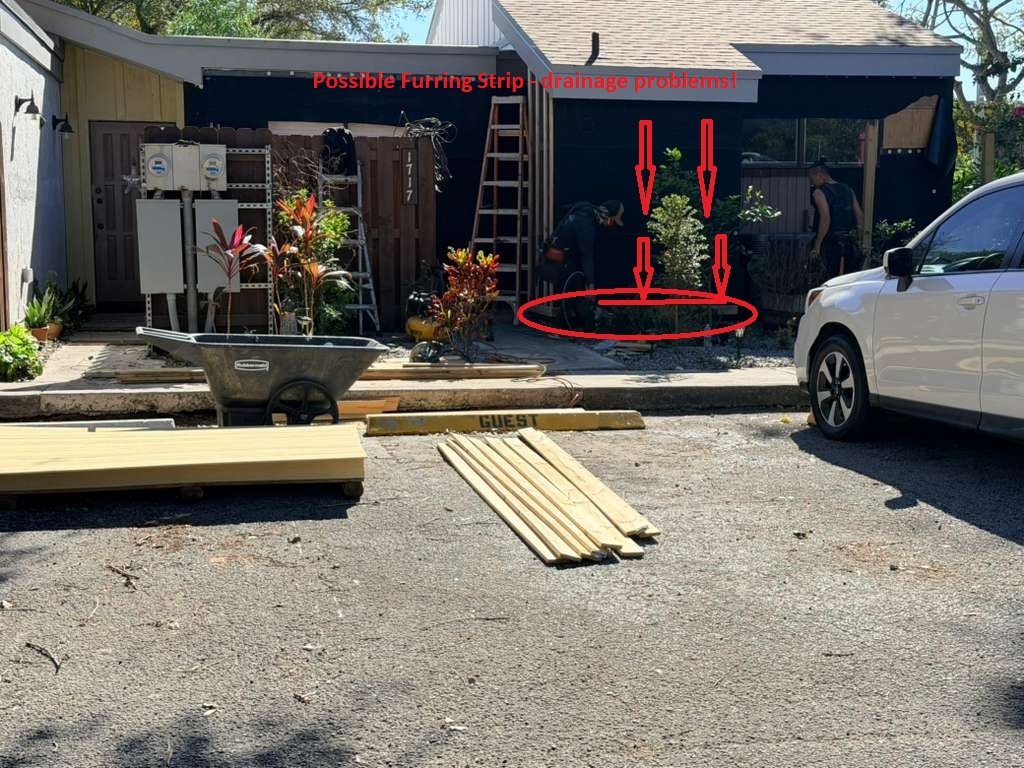
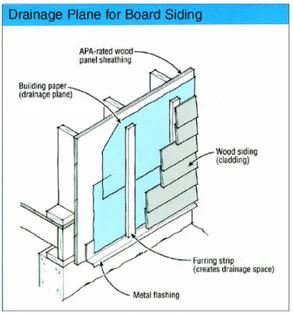
What Are Furring Strips?
Thin wooden spacers typically used to level uneven walls. They’re fine if they’re needed — and permitted. But they were:
- Not part of the original contract scope for frame walls
- Never disclosed in construction notices to owners
- Likely used to alter wall depth and shift window rough openings, causing window flanges to misalign and forcing unnecessary window replacements
- Likely a workaround for defective Hardie Board installation
What It Means for Owners:
Window replacements are now required in many units after Austro Construction Company admitted that the walls shifted by up to 1.5 inches — a direct result of the furring strips being installed behind new siding.
At an estimated $10,000–$15,000 per unit, the total community burden could reach $1.2 million to $1.9 million if all 128 units are affected — all tied to a scope change no owners voted on or approved.
The Real-World Impact:
Phase 2 owners are now buried under over $1 million in fines, with no resolution
The HOA Board has not provided a construction budget, a materials breakdown, or proof that these changes were legally permitted
This isn’t just a construction dispute — it’s a financial ambush disguised as a repair project.
We’ve submitted photos, videos, and contract excerpts to the City and State. If you’re a legislator, journalist, or attorney — ask yourself:
- Why were furring strips installed at all?
- What if the furring strip (rain-screen wall system) wasn’t designed by the EOR – Engineer of Record?
- Who approved the scope changes in the signed contract that had no furring strips listed in frame wall scopes for 1st or 2nd floor walls?
- And who is going to pay for the damage if it is caused from a defective rain-screen wall system?
- How much will this cost the owners in this community if these furring strip (aka Rain-Screen Wall System)fail because they weren’t designed by an engineer or may contain a water daming defect? Millions???
Key Design Deviation Confirmed
The official construction contract provided to owners and lenders makes no mention of furring strips between the weather barrier and Hardie Board. This component was later installed without vote, engineering disclosure, or recorded justification — a change that shifted wall alignment and forced costly window replacements on owners in Phases 1 through 3.
See Exhibit T for a visual excerpt of the contract scope confirming this omission.
Phase 4 — which did not receive furring strips — also did not require window replacements, further proving that the change was likely unnecessary and financially abusive.
Common wood siding installation mistakes to avoid.
- Installing horizontal furring to attach siding: If your siding requires horizontal furring install a first layer of vertical furring to allow a drainage cavity, then a second layer. Horizontal furring strips can stop air flow and prevent water from draining out. Diagonally installed furring is an option that can also work without needing a second layer.
- With a horizontal wood furring strip, any wind driven rain that gets behind the siding is a problem – they prevent gravity from draining the water out of the bottom. Even worse, once the trapped water is inside the wall cavity, it is absorbed by the wood furring strip. Since the water has nowhere else to go – and wood is hygroscopic (water absorbing) – the trapped water remains in place. This can lead to mold and eventually rot. As the furring strips rot, this can lead to mold growth inside the building envelope.
- Horizontal beams can form little ledges and become a trap for moisture. For this reason, furring strips should always be installed vertically to establish an effective drainage plane that helps water runoff flow downwards. Install the furring strips between the housewrap and the siding, leaving a significant gap between each strip to allow enough airflow to help with ventilation needs.
- In other words, a rainscreen design using wood furring strips is, at best, only 80% effective, before it is even installed. While an 80% effective rain screen system is certainly much better than no rain screen at all, why should you have to settle for less when there are better rainscreen options available? Architects and builders often ask us if hardwood furring strips are better than softwood furring and, although the answer is “yes”, it is a matter of degrees. It is true that hardwood furring strips are denser and therefore less hygroscopic than softwood furring strips and have less of a tendency to rot. Any wood furring strip, however, under the right trapped moisture conditions, has the ability to harbor and feed mold and may eventually rot over time.
- The Climate-Shield Rain Screen system is designed to eliminate the need for wood furring strips altogether. The Climate-Shield Rain Screen Clip can be fastened directly into structural sheathing such as plywood or OSB. The precision manufactured size of each rainscreen clip creates a perfectly uniform wall cavity behind the siding. Because of the small size of the rain screen clip, only 2% of the building envelope is in contact with the clips. In other words, the Climate-Shield system is 98% effective by design. Equally important, since the Climate-Shield Rain Screen clips are also made from highly durable marine grade aluminum, they are not a food source for mold. Consider using the Climate-Shield system for your next rain screen design project.
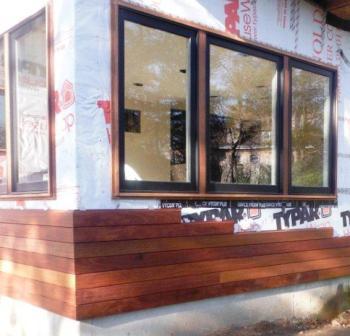
Rain-Screen Wall Failure Study:
The Rainscreen Association in North America (RAiNA) provides a case study focusing on a residential building in Cape Cod, MA. The study reveals that improper installation of rainscreen components led to significant moisture infiltration, resulting in sill plate damage and costly remediation efforts. It serves as a cautionary tale about the importance of correct rainscreen application. (link below)
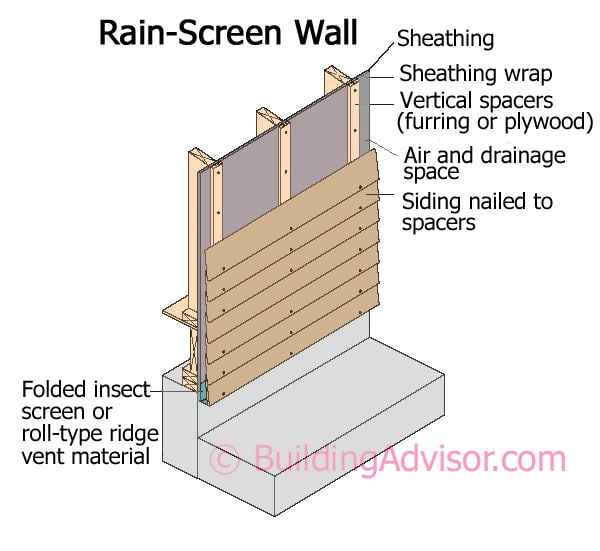
A DIAGRAM OF A PROPER RAIN-SCREEN WALL
Note that there are no horizontal furring strips! (BELOW)