
Last Updated
Purpose:
To compare the official Austro Construction contract scope with the actual work performed on-site, highlighting discrepancies that constitute potential fraud, false billing, and unauthorized alterations.
Introduction
Exhibit Q highlights the widening gap between Austro Construction’s $4.85M contract for Omega Villas and the reality of work performed. The contract contained no detailed construction budget, relied on discretionary methods such as furring strips that were not code-required, and has generated cascading costs for owners including unnecessary window replacements, relocation of utilities, and disruption of peaceful enjoyment of property. Evidence presented herein — contract excerpts, photos, videos, engineering guidance, and owner testimony — demonstrates a pattern of misrepresentation, cost inflation, and selective enforcement. Taken together, these findings suggest that the project was not executed in good faith and may constitute both construction defects and financial abuse. Link
Contract Review: Austro Contract vs. Reality
| Contract Scope | Reality Onsite | Concern |
|---|---|---|
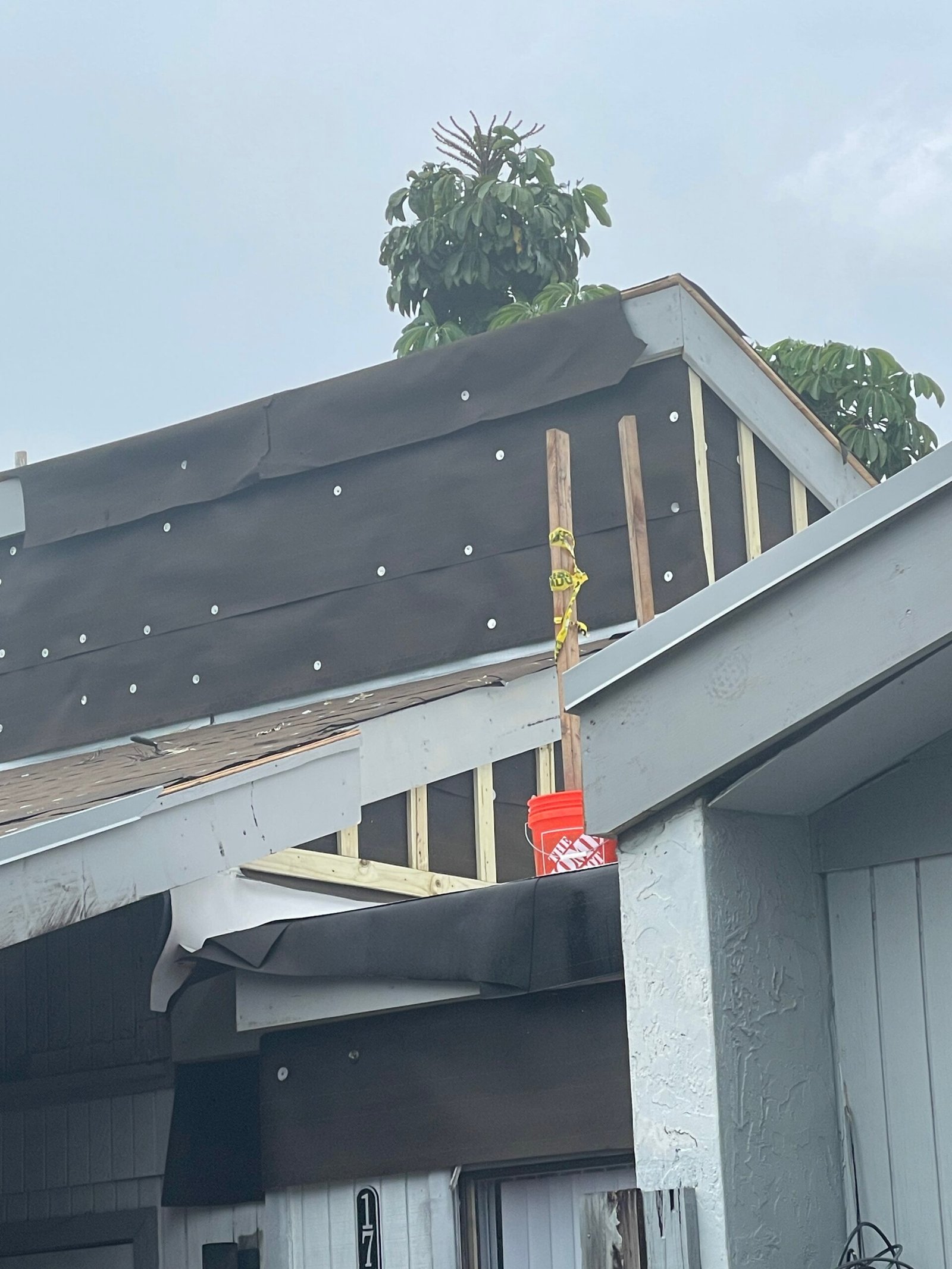
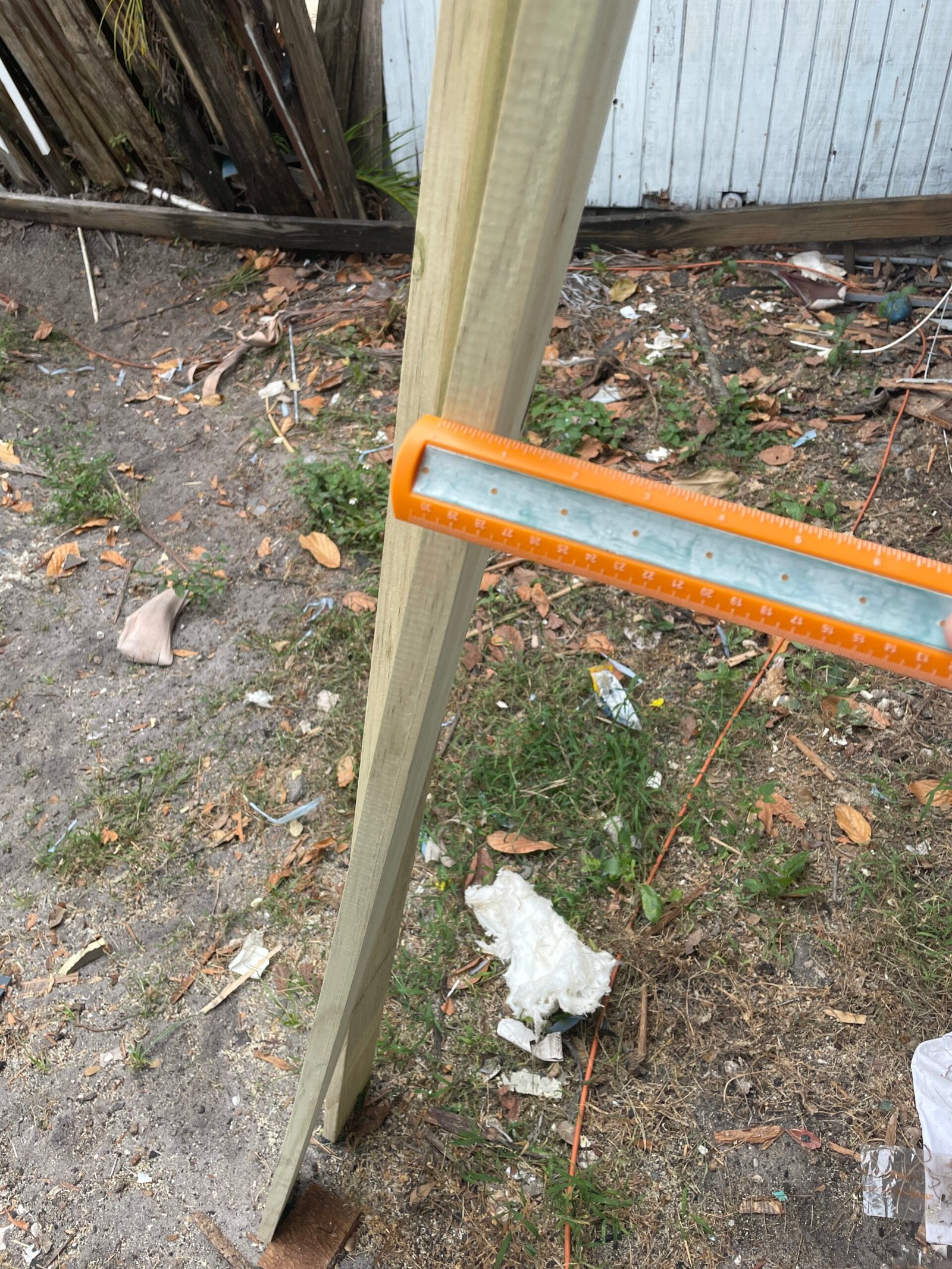
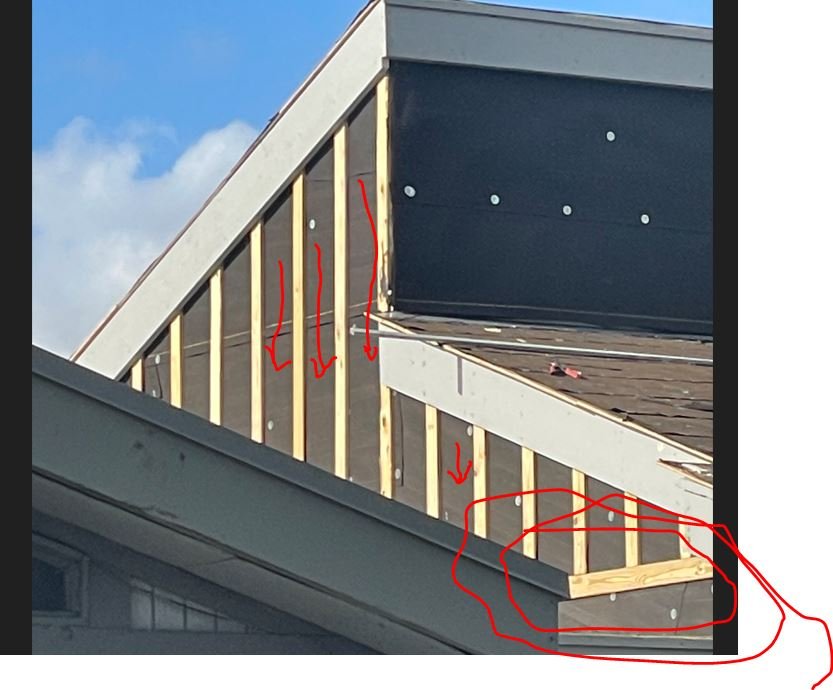
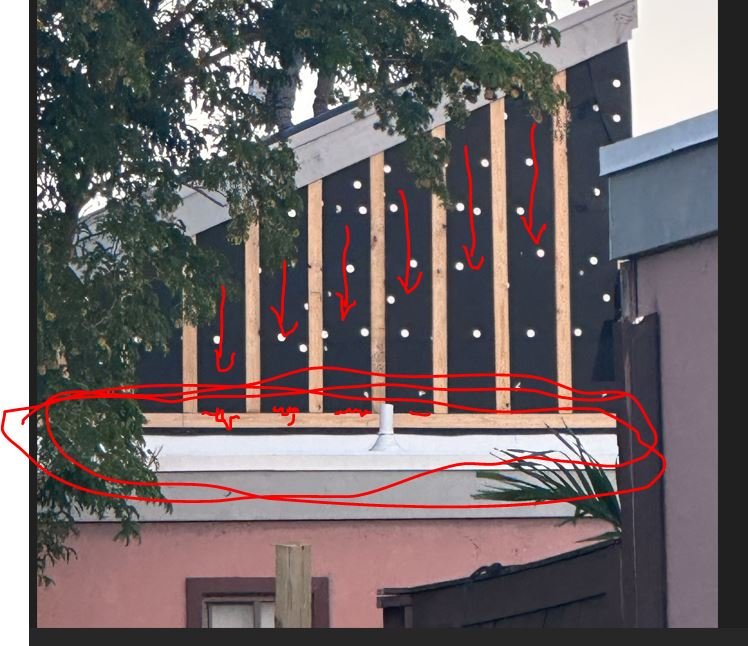
| Furring strips only listed for fascia drip edge; no mention in wall scopes. | Furring strips installed across exterior siding in Phases 1–3. | Unauthorized furring strip scope deviation; triggered costly downstream impacts including forced window replacements. |
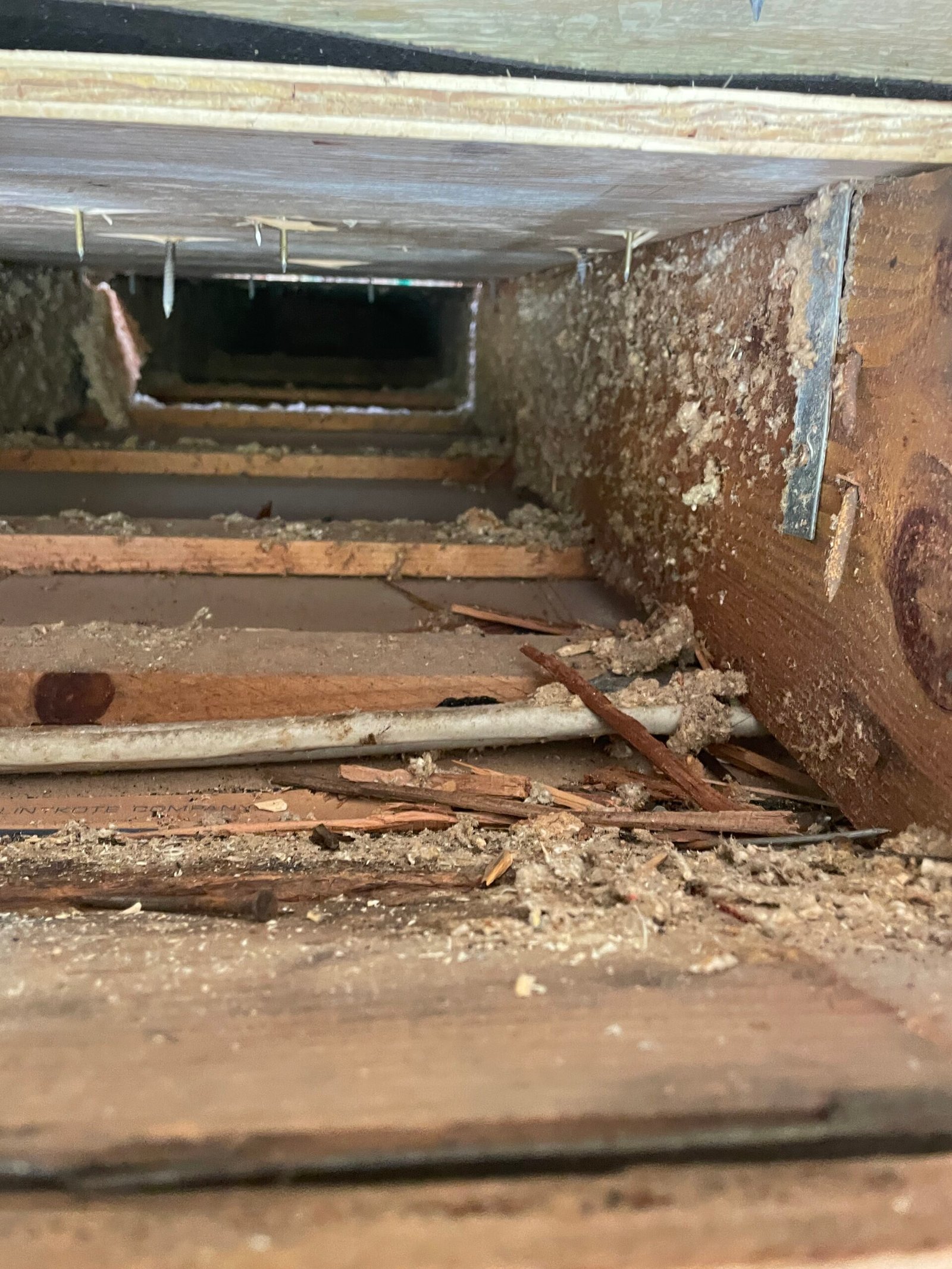
| No roof insulation requirements for pitched roofs. | Multiple pitched roof assemblies completed with no visible insulation added back after it was removed(Units #48, #49, etc.). | Violation of Florida Building Code (FBC-EC R402); increased owner utility costs; potential false compliance. |
| Patios in Phases 1–4 originally had false ceilings; contract obligated restoration to original condition. | Austro attempted to avoid reinstalling patio false ceilings in Phases 1-3. Patty confirmed on record they must be replaced. | Scope avoidance and cost-cutting; potential breach of contract if not replaced. |
| Window systems excluded unless added by authorized change order. | Owners told window systems must be replaced due to furring strip installation. | Potential fraudulent inducement: multi-million-dollar scheme not authorized in contract scope. |
| Proper testing required (ASTM E1105, E330, AAMA 502, etc.) for window fenestration systems. | S&D & Austro engineering window system reports were visual-only (fogging, cracked panes, warped frames). | Potential misrepresentation: noncompliant reports used to pressure owners into costly replacements. |
| Contract obligated structural foundation repairs as part of recertification. | Foundation cracks or sunken foundations appear ignored or superficially patched. | Long-term structural risk; potential false compliance if signed off without proper repairs. |
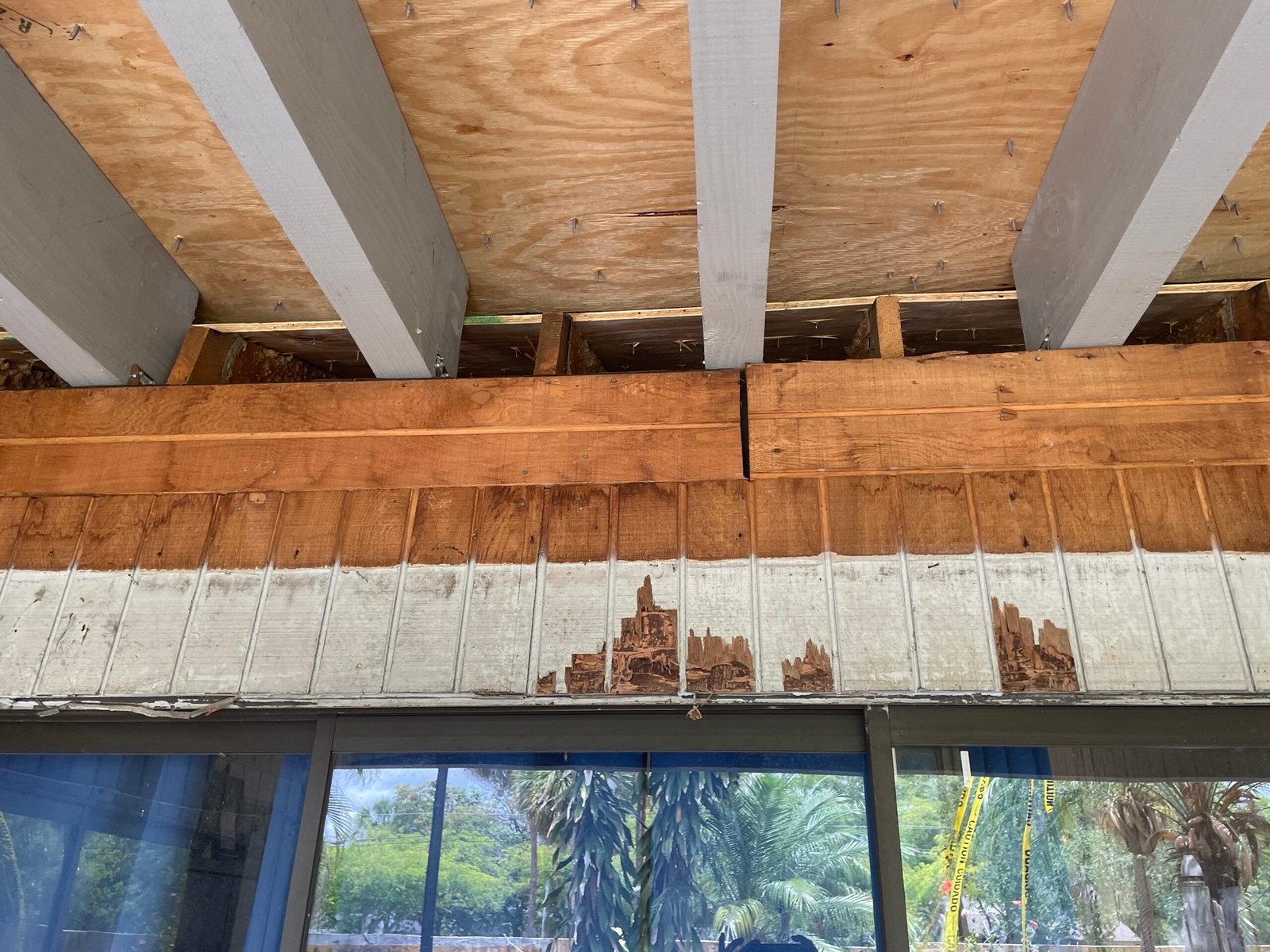
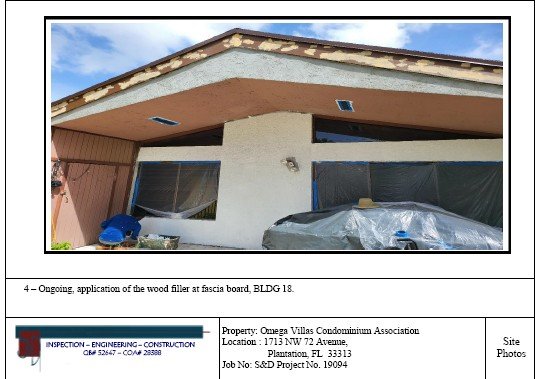
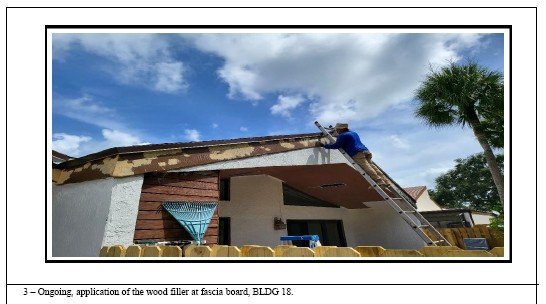
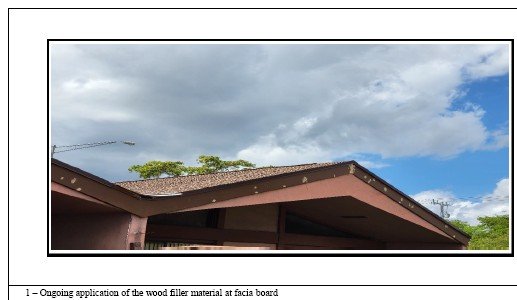
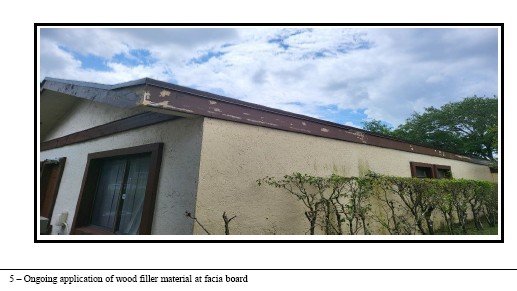
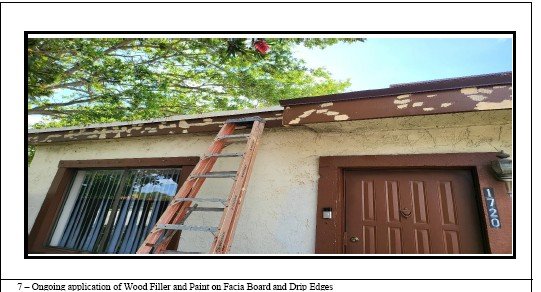
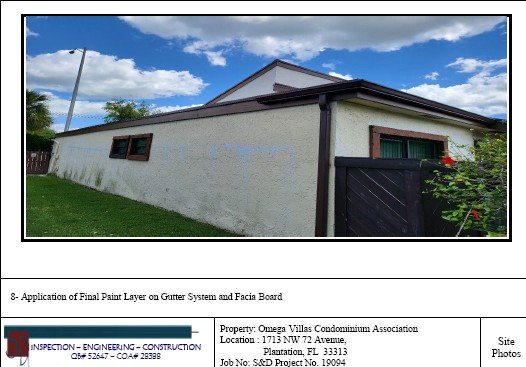
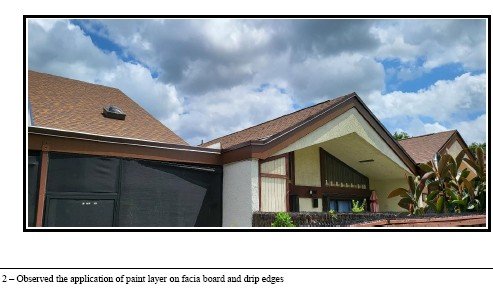
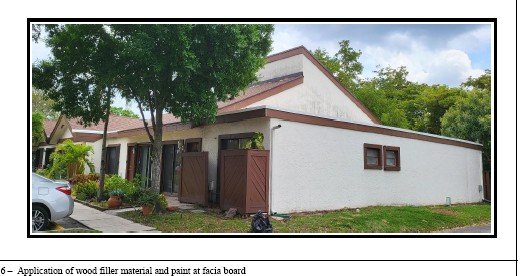
| Fascia boards to be replaced with new code-compliant material. | Damaged/rotted fascia boards concealed with wood filler instead of replacement. | Shortcut repair; potential fraudulent substitution of materials. |
| Repairs to be applied uniformly across all units. | Maude Bruce’s unit received foundation repairs; Beth (plaintiff in 2023 water intrusion from foundation lawsuit) remains unrepaired with ongoing leaks (confirmed via email). | Evidence of selective enforcement; potential retaliation and breach of fiduciary duty. |
| Contract made no mention of additional owner assessments for relocating/reinstalling A/C units, plumbing lines, and electrical meters/panels due to Austro’s wall alterations. | Owners to be charged new special assessments to move/reinstall A/C units, plumbing lines, and electrical meters/panels due to Austro’s wall alterations. | Potential cost-shifting and misrepresentation: contractor deviations passed to owners as new assessments. |
| Contract made no mention of additional owner assessments for relocating systems. | Board and management have discussed imposing new special assessments to move/reinstall A/C units, plumbing lines, and electrical meters/panels as a result of Austro’s wall alterations. | Potential cost-shifting and misrepresentation: owners are being set up to absorb expenses not included in the $4.85M contract scope. |
Owners are being assessed for relocation of A/C systems, pipes, and electrical panels — costs that were not included in the $4.85M contract. These new charges stem directly from Austro’s unauthorized scope deviations (e.g., wall furring strips and siding changes), making this a case of cost-shifting from contractor to owners.
Issues Identified
Contract & Scope Documentation
- Q1 Attachments – Final Austro Contract (01/17/2023 Version, signed) Link (This version is online on Omega Villas website and was circulated to 128 owners plus families)
- This document is provided for public review to illustrate scope, pricing, and governance issues relevant to current oversight discussions. Personal data has been removed. All information is drawn from official Association records.
- Q2 Attachment – Exhibit A from Contract (showing fascia drip edge language only, with no furring strips listed in 1st- or 2nd-floor wall scopes). Link
- Q3 Attachment – Change Orders (or confirmation of no change orders adding windows)
- Video evidence pending upload – Board Treasurer Blaire confirms no change orders submitted. Link (Patty @ 17:10 minutes into video stating not charging extra for that. We have not signed one change order. )
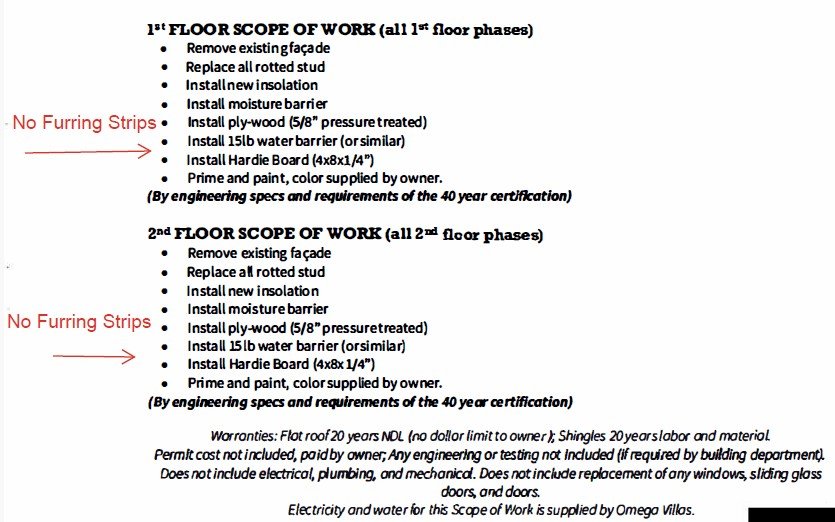
- Q4 Attachment – Manipulated Construction Scheduling & Fabricated Scope
- 📑 Key Findings
- Purpose
To demonstrate how project schedules and construction scope were manipulated under Board influence, resulting in discretionary design changes — specifically the fabricated use of furring strips — that forced unnecessary costs on owners.- 1. Construction Scheduling Manipulation
Work schedules were apparently altered after Board President Patty Sabates expressed dissatisfaction that residents did not select her preferred paint colors.
This indicates construction sequencing was subject to personal interference, not solely engineering or safety requirements. - 2. Fabricated Scope – Furring Strips
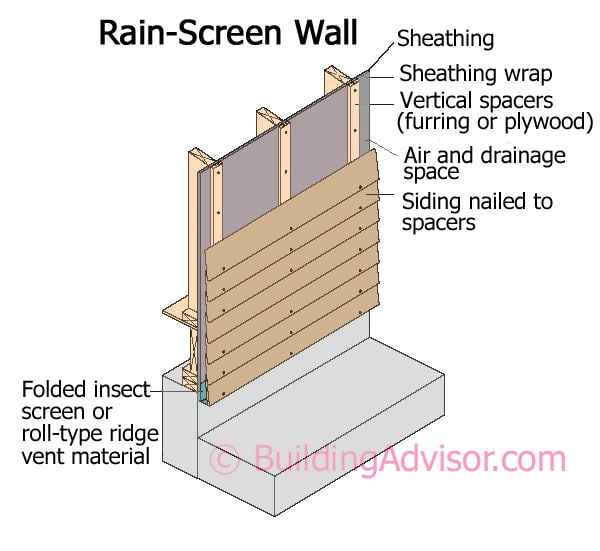
Austro & the Rogue Board allegedly introduced furring strips into the project and misrepresented them as “mandatory.”
Manufacturer standards show furring strips are optional, not required for Hardie systems.
This change extended walls outward, creating a condition that forced removal/reinstallation of windows and pressured owners into expensive window replacements. - 3. Material Alteration Without Approval
These alterations were not included in the original Austro contract scope or construction budget.
Under F.S. §718.113(2)(a) and Bailey v. Shelborne (2020), such material alterations required 75% owner approval before commencement — approval that was never obtained.
- 1. Construction Scheduling Manipulation
- Purpose
- 📌 Impact on Owners
Unnecessary costs imposed under the guise of “code compliance.”
Owner choice disrupted through coercion into window packages.
In my opinion, this reflects both financial coercion and bad-faith manipulation of the project scope. - ⚠️Original Schedule Not Implemented
- The original construction schedule, presented to owners as the basis for loan approval and project scope, was never implemented. Instead, sequencing was altered due to Board interference (e.g., paint color disputes) and discretionary design changes (e.g., fabricated furring strip requirement). This deviation from contract terms demonstrates mismanagement and lack of good-faith execution. Link1 & Video Link2
- 📑 Key Findings
On-Site Construction Evidence
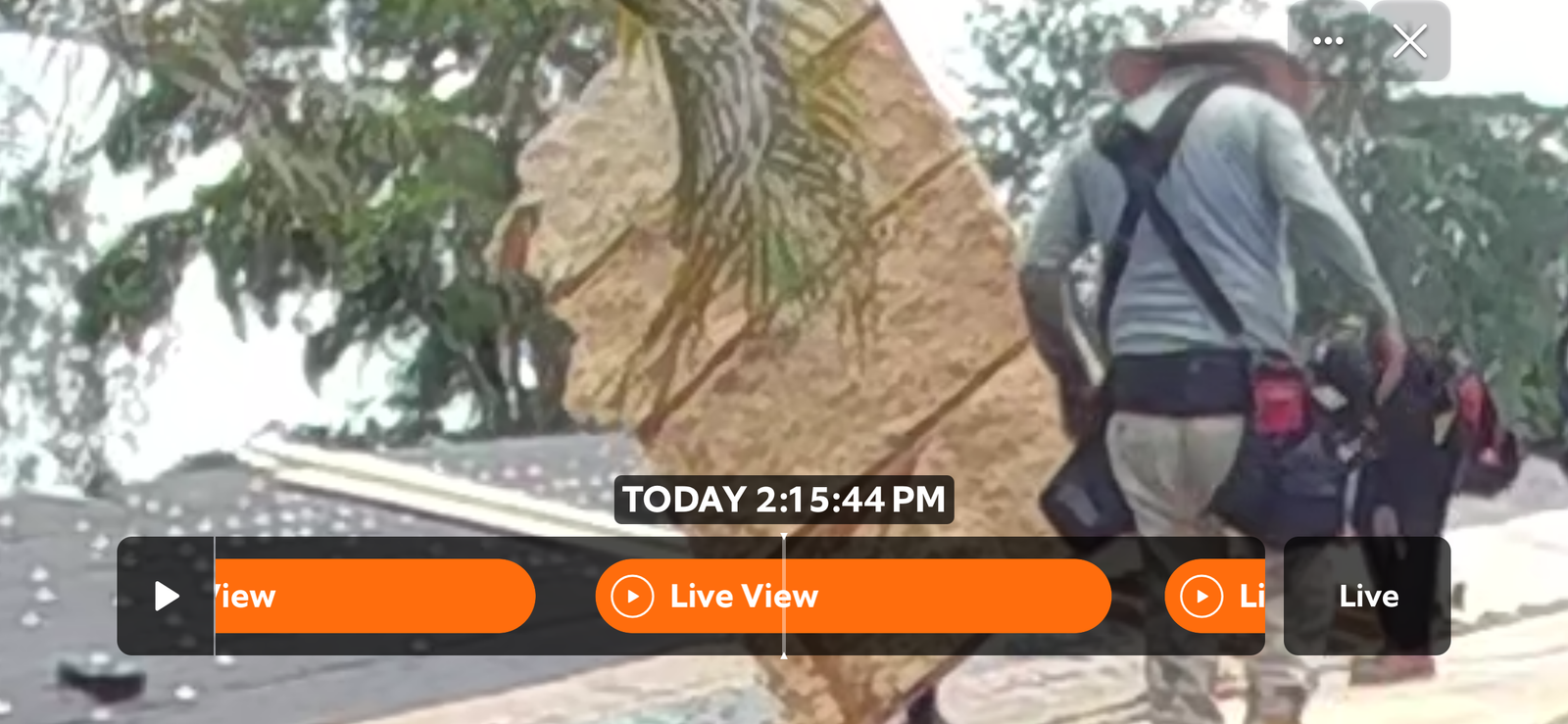
- Q5 Attachments – Photo/Video Evidence of Furring Strips Installed on Exterior Walls. Link1, Link2, Link3, Link4, Link5, Link6, & Link7
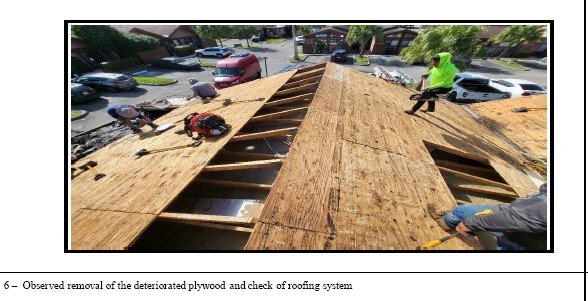
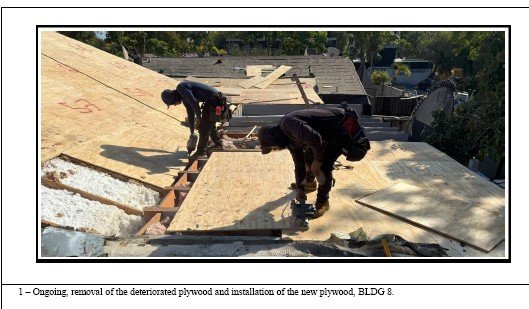
- Q6 Attachments – Photo/Video Evidence of Missing Pitched Roof Insulation (Units #48, #49, etc.) Link1, Link2, Link3, Link4, Link5, Link6, Link7, Link8, & Link9
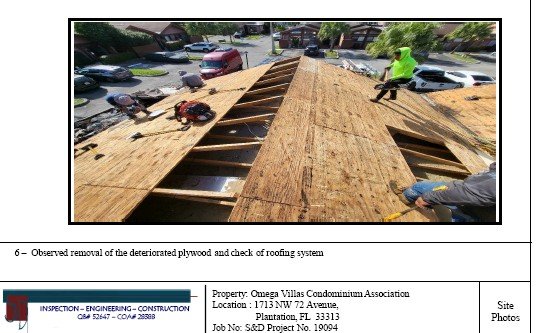
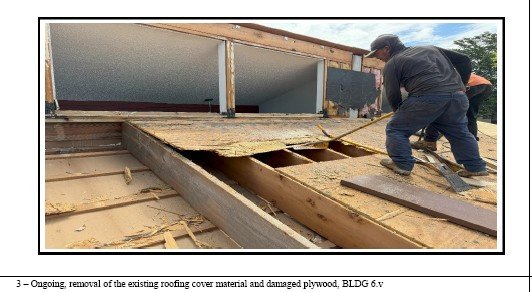
- Attached as Q6 Links are photographic and video evidence showing that insulation was not reinstalled in multiple pitched roof units (e.g., Units #48, #49). Florida Building Code requires that insulation be restored or replaced when roof assemblies are opened. Austro’s omission is, in my opinion, both a code violation and an intentional cost-cutting measure at the expense of owners.
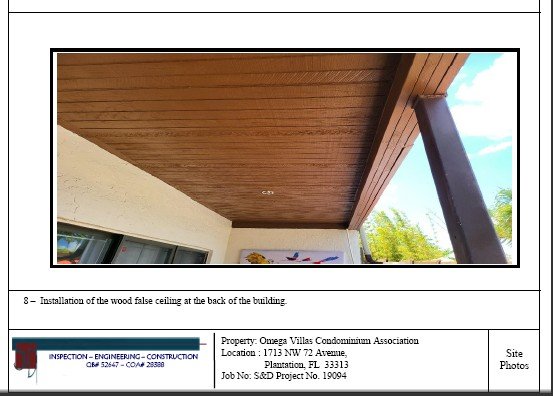
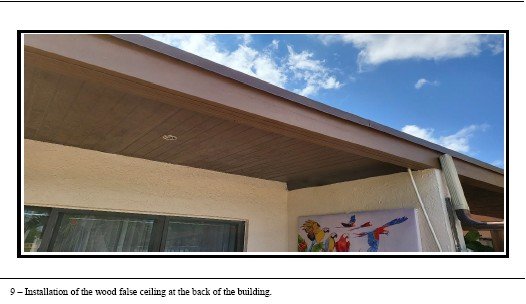
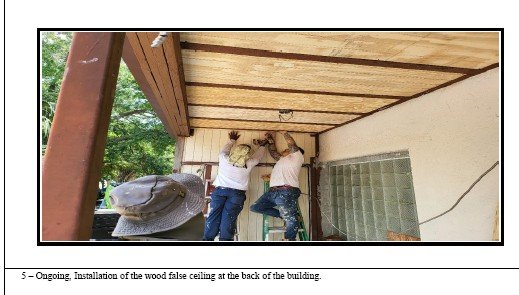
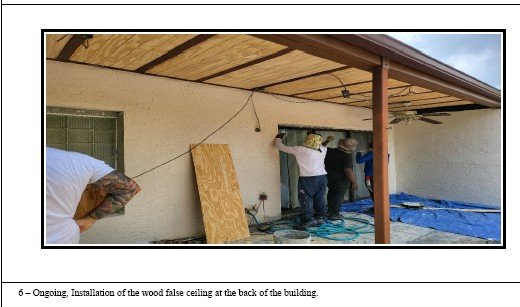
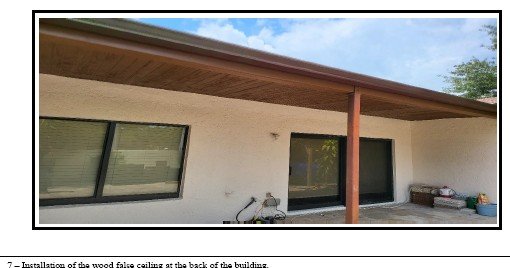
- Q7 Attachments – Photo Evidence of Installed False Ceilings (Phases 4 Patio Areas) Link1, Link2, Link3, Link4 & Link5
- Q8 Attachments – Photo Evidence of Non-Installed False Ceilings in Phases 1–3 Patio Areas.
- Patios in Phases 1–4 were originally constructed with false ceilings. Austro attempted to avoid reinstalling them, but Board President Patty confirmed on record they must be replaced to match original construction.
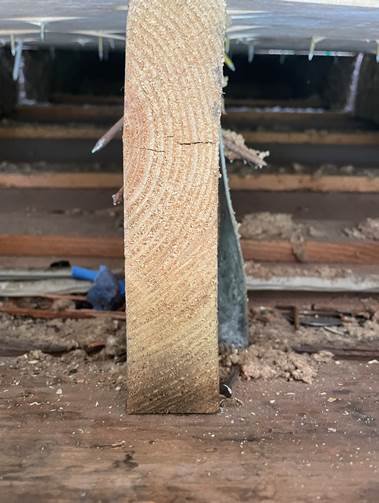
- Q9 Attachments– Photo/Video Evidence of Fascia Boards Repaired with Wood Filler Instead of Replacement.

- Q10 Attachments– Repair Records/Photos showing completed work at BOD Maude Bruce’s unit. Link1, Link2, Link3, & Link4
- Q11 Attachment – 2023 Lawsuit Filing by Beth regarding interior water intrusion. Link
- Q12 Attachments – Email Confirmation showing Beth’s continued water intrusion issues with no repairs scheduled.
- Repairs were selectively allocated. Maude Bruce received repairs, while Beth — who sued in 2023 for water intrusion — continues to face active leaks with no scheduled repairs. This disparity suggests retaliation and breach of fiduciary duty.
- Multiple Links on Beth’s repair requests for the water leaking foundation discovered in her lawsuit back in 2023: Link1, Link2, Link3, Link4, Link5, Link6, Link7, Link8, Link9, Link10, Link11, Link12, Link13, Link14
Engineering Reports & Owner Communications
- Q13 Attachment – S&D Engineering Reports(showing visual-only methodology) Link1, Link2, Link3, Link4, & Link5
- Q14 Attachment – Austro Contractor Report declaring windows compromised.
- Evidence shows Austro attempting to complete construction by declaring existing windows “compromised,” thereby forcing unnecessary replacements onto owners, including my own home. Link1, Link2, & Link3,
- Attorney Rhonda Hollander reinforced this pressure in correspondence, escalating legal threats to compel compliance with the contractor’s position rather than protecting owners’ rights. Link1, Link2, Link3, Link4, Link5, Link6
- Sunrise Management saying that windows will fall out or need to be replaced by removing the wood t-111 siding when they are not attached to the siding but rather the studs. Link
- ⚠️Video Links of window system replacement discussions (lies on video in my opinion). Link1, Link2, Link3, Link4, Link5, Link6, Link7, & Link8
- Q15 Attachment – Association Notices/Letters to Owners stating windows required for 40-Year Recertification. Link1
- Q16 Attachments – City of Plantation Emails/Statements Confirming Windows Are Not Part of the 40-Year Recertification. Link1, Link2, Link3, & Link4
- ⚠️ Key Problems
- Visual-Only Evidence: None of these reports document water penetration tests (ASTM E1105) or wind pressure tests (ASTM E330), both industry standards.
- Circular Reasoning: Some reports declare windows “compromised” because of damage created during removal, not because of inherent defects.
- Burden-Shifting: Owners told they must either buy impact windows or install shutters at their own expense — despite no contract or statutory requirement.
- Misrepresentation of Recertification Law: 40-year recertification does not mandate window replacement, but this was implied.
- ⚠️ Key Problems
- Q17 Attachments – S&D Engineering Scoping Documents and Vendor Bids related to proposed special assessments (A/C unit relocation, plumbing reroutes, and electrical meter/panel moves).
- These documents show how S&D framed new system relocation work as necessary, setting the stage for additional special assessments. Vendor bids further demonstrate the financial impact that may be shifted to owners outside of the original $4.85M Austro contract scope. Link1, Link2, Link3, Link4, Link5, Link6
Counter-Evidence / Debunking Materials
- Q18 Attachments – Florida 40-Year Recertification Checklist (highlighting no window replacement requirement) Link1, Link2, Link3, Link4, Link5, & Link6
- Q19 Attachments– ASTM E1105 / ASTM E330 Testing Standards (to show required but omitted procedures) Link1 & Link2
- Q20 Attachment– Comparative Engineering Guidance (showing industry best practices for recertification and window testing)
- Florida Building Code – Window & Glazing Testing / Labeling
The Florida Building Code requires that windows/glass doors be tested by an approved independent laboratory and labeled to show compliance. Florida Building - Florida Building Code – Chapter 17: Special Inspections & Tests (Exterior Windows / Doors)
The code requires that “Exterior window and door assemblies shall be tested and labeled as conforming to AAMA/WDMA/CSA101/I.S.2/A440 or TAS 202…” ICC Digital Codes+2ICC Digital Codes+ - Broward County Building Safety Inspection Program (40-Year Recertification)
Broward’s program is structured around structural + electrical safety inspections for 40+ year buildings — it does not include blanket requirements of window replacement. Broward County - Florida Building Code: Exterior Window / Door Performance Requirements
The FBC’s “Window Systems” fact sheet states that windows must meet wind and water intrusion performance, not guarantee lifetime replacement. buildingasaferflorida.org
- Florida Building Code – Window & Glazing Testing / Labeling
- Q21 Attachments – City/County/State Guidance Confirming 40-Year/Milestone Recertification Covers Structural & Electrical Safety (No Blanket Window Replacement Requirement)
- Key Facts:
- Broward County 40-Year Program: Defines inspection scope as structural integrity and electrical safety — no mention of mandatory window replacement. (Broward County PDF)
- City of Plantation: Confirms the local Building Safety Inspection Program follows the Broward framework; focus is on structural and electrical safety. (City of Plantation Building Safety Inspection Page)
- Miami-Dade Guidelines: Owners must prove buildings are structurally and electrically safe for occupancy — windows are not listed as required replacements. (Miami-Dade Recertification Guidelines)
- Florida SB 4-D (Milestone Inspections): State law specifies inspections of primary structural systems (slabs, load-bearing walls, roofs) — no blanket requirement to replace windows. (Florida Building Commission SB 4-D Overview)
- Florida Building Code: Only when windows are replaced must they meet impact/shutter requirements. This is a condition of replacement, not a recertification trigger. (Building a Safer Florida – Window Code Update)
- Key Facts:
Material Manipulation in Mixed Wood-Frame / Masonry Buildings (Phases 1–3)
Late-stage furring-strip installation on mixed-construction Buildings 1–15:
In Phases 1–3 — where Buildings 1 through 15 are mixed wood-frame and masonry structures — crews added wood furring strips near the end of the project, long after primary wall work had been declared complete. These strips were not part of the signed construction contract that secured the $4.85 million Banco Popular loan, nor were they reflected in the approved engineering or permitting scope.
Implied “mandatory” requirement under false pretenses:
The Board and Association counsel later implied that the Miami-Dade Notice of Acceptance (NOA) required the installation of furring strips as part of compliance.
In reality, the NOA is optional and applies only to the use of a specific approved product—it does not mandate the addition of furring strips in existing wall systems. The implication that it did so it appears to create a false appearance of regulatory necessity.
By suggesting this was a “required step,” the Board and counsel possibly misled owners and inspectors into believing Austro’s add-on was a compliance issue, when it was actually a non-contractual wall modification. This maneuver inflated costs, thickened walls, displaced window openings, and generated new owner expenses.
Failure to obtain 2/3 owner approval for material change:
Compounding the problem, the Board appears to have never held or documented the required two-thirds (2/3) membership vote to authorize a material alteration — the change from original wood T-111 siding to fiber-cement Hardie Board.
Under F.S. §718.113(5), such a change constitutes a “material alteration” of a condominium’s common elements, requiring prior owner approval.
By bypassing this statutory safeguard, the Board effectively authorized a major construction material swap without legal authority, committing the community to years of downstream costs — including window modifications, structural adjustments, and aesthetic mismatches — none of which were vetted or approved by owners.
Purpose and effect:
- 🧱 Not structural: The added furring strips and material substitution did not strengthen the building — they thickened walls and caused alignment failures.
- 💰 Scope inflation: The changes manufactured new billable work (trim rebuilds, drywall returns, re-stuccoing).
- 🕳️ Concealment: The new wall plane hid whether insulation or moisture barriers were ever properly installed.
- ⚙️ Procedural violation: No 2/3 owner vote under F.S. §718.113(5) — meaning the entire siding replacement was unauthorized.
- 📑 Contract deviation: The furring strips and siding change were apparently absent from the Banco Popular–funded scope, making this a post-loan alteration executed without full community or lender disclosure.
Result:
By implying a false regulatory requirement, skipping the statutory owner vote, and deviating from the approved contract, the Board and its counsel appears to have turned what should have been a repair project into a material alteration without legal authority, exposing owners to hidden costs, permanent construction defects, and the possibility of loan or insurance noncompliance.
⚠️ Unauthorized Material Change: From T-111 to Hardie Board Without 2/3 Vote or Contract Authority
⚠️ Broader Implications
- Potential Fraudulent inducement: Owners approved a contract that did not match delivered work.
- Potential False billing: Paid scope (insulation, engineering oversight) appears missing or misrepresented.
- Potential Unpermitted alterations: Furring strips and forced window replacements were never part of the authorized scope.
- Potential Regulatory failure: City of Plantation signed off on work that did not match the contract or Florida Building Code.
- Improper engineering practices: Reliance on visual-only inspections, not code-mandated ASTM/FBC tests.
- Potential Fraudulent Inducement: Homeowners pressured into multi-million-dollar replacements without apparent legal or engineering basis.
- Potential Vendor collusion: Contractors apparently used incomplete “engineering” reports to create artificial scope expansion.
- Potential Regulatory failure: City and DBPR failed to enforce testing and certification standards.
📌 RICO Connection
This Exhibit appears in my opinion to demonstrate:
- Potential Fraud (18 U.S.C. § 1341, § 1343) — misrepresentation of contract scope and false billing.
- Potential Conspiracy (18 U.S.C. § 1962(d)) — Board, Austro, and possibly City inspectors possibly acting to conceal deviations.
- Potential Predicate acts for racketeering: Possible fraud, obstruction of justice, retaliation against owners who questioned the discrepancies in my strong opinion.
These possible contract manipulations and possible fraudulent reports may form part of the racketeering pattern documented across Exhibits S, O, and AA.
In addition to potential fraud and racketeering, these deviations have already caused real financial harm to owners — including forced window costs, utility relocations, and increased monthly assessments not contemplated in the $4.85M contract.
References: